

Are You a Toy If You Don’t Change Your Throwie?
Graffiti throw ups (also known as throwies) are a cornerstone of graffiti. Lately, there’s been a heated conversation among writers about whether you should keep developing your throwie style or stick with one design. Newer graffiti writers sometimes label oldschool legends as “toy” graffiti artists if they haven’t constantly evolved their throwie design. In this post, we’ll dive into how they became personal signatures for writers, the impact of social media on style, and the debate between evolving your graffiti throwie design versus perfecting one graffiti signature style. We’ll also give advice for beginners on when to refine your throw-up and when to commit to a style. Let’s get into it!
History and Original Purpose of Graffiti Throw Ups
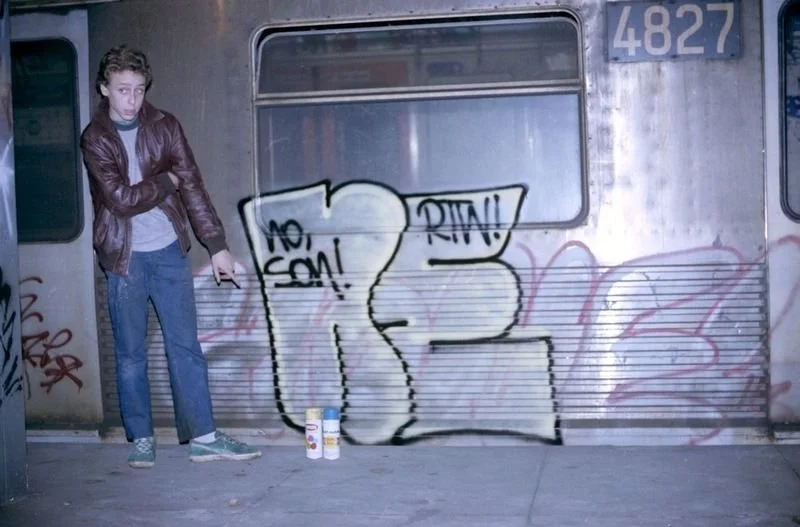
Throw-ups have been around since the early days of modern graffiti. They first originated in the New York City subway, where writers needed a way to get their names up fast on trains before authorities could catch them and they needed these to be large and simple so they could be read at a far distance while the train moved. In fact, the term “throw-up” comes from the idea of throwing your paint onto the wall as rapidly as possible.
Early throw-ups were usually one or two colors, for example, a fill color and an outline, allowing artists to cover a surface in seconds and move on. The goal was to hit as many spots as possible in one night. Because they could be done so quickly, throw-ups became the preferred method for “bombing” (painting the area with your name). Even though decades have passed, the core formula of a throwie hasn’t drastically changed; it’s still about bold, easy-to-read letters done at high speed.
Throwies as Personal Signatures in Classic Graffiti
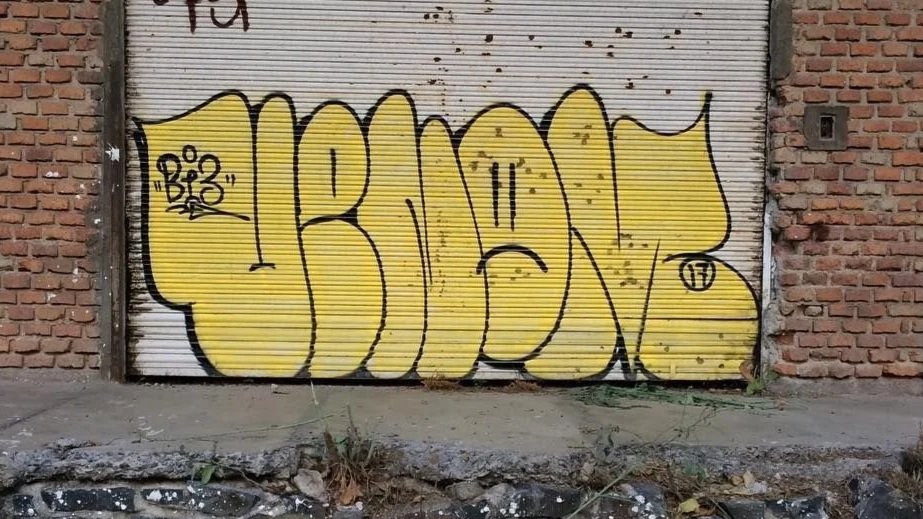
As graffiti culture developed, throw-ups became the personal signature style of many writers. Most graffiti writers have a go-to throwie that they’ve practiced countless times. Because throw-ups are done under time pressure, you want a design that you can execute consistently from memory. Consistency and recognition are key, your throw-up should look the same each time, so people instantly identify it as yours. Writers often drill their throwie in sketchbooks and on walls until they can do it in their sleep, with uniform letter shapes and layout. This repetition builds a sort of “logo” for the writer.
For example, certain legendary writers are almost inseparable from their throw-up. One famous New York bomber, JA, has been using the same two-letter throwie since the mid-1980s with unmatched consistency. His iconic “JA” throw-up is stamped absolutely everywhere, highways, rooftops, tunnels, you name it, in bold, fast letters. He perfected those two letters to the point that they became instantly recognizable. JA isn’t alone, lots of classic graffiti artists developed a trademark throwie. GHOST, for instance, kept his letters “simple by design, making them easy to replicate over and over at high speed,” which meant his name appeared on gates, highways, and rooftops all across the city. In summary, the traditional approach treated the throwie as a personal hallmark, something you refine and then roll out consistently so it becomes your signature in the streets.
The Influence of Social Media on Throwie Style Evolution
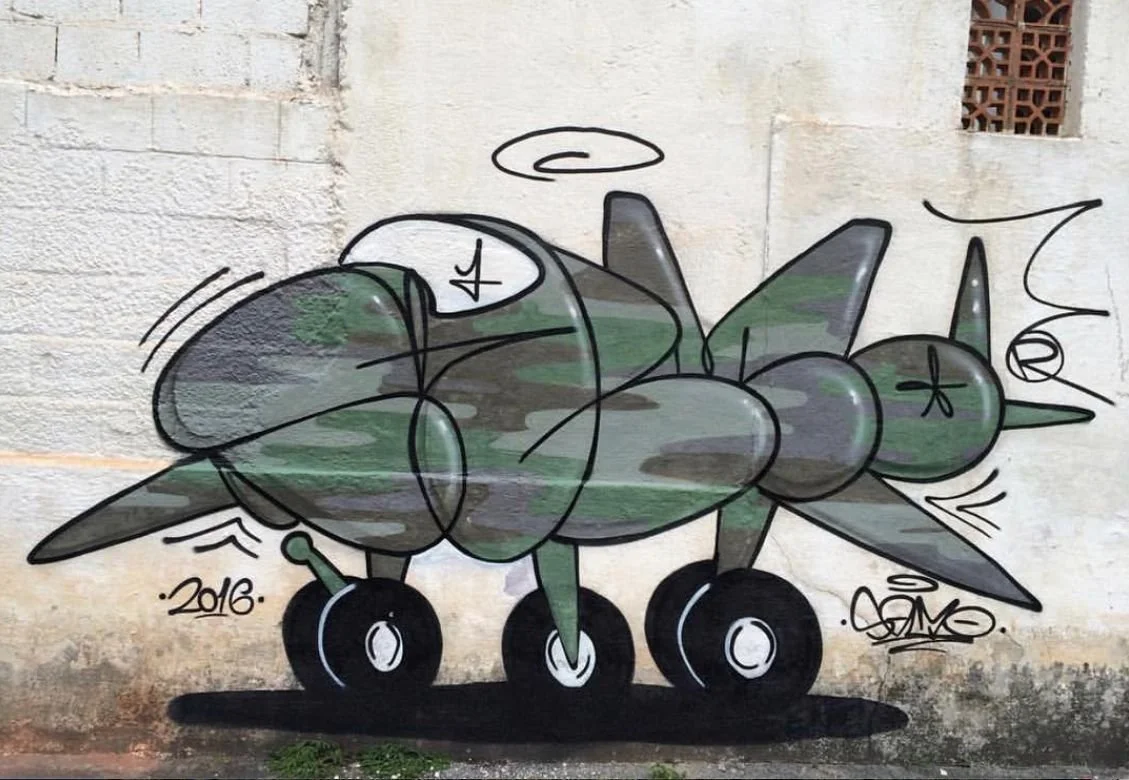
Fast forward to today, and graffiti doesn’t just live on the streets; it lives online. Social media has dramatically changed the way graffiti styles spread and evolve. Platforms like Instagram and YouTube have made it easy for writers from all over the world to share their work, see each other’s styles, and exchange ideas instantly. This digital exposure has effectively blurred the lines between local and global graffiti trends. A throw-up style that pops up in one city can be viewed by thousands of people worldwide the same day. The result? Trends in graffiti lettering now evolve and spread at a faster pace than ever before. What might have been a local quirk in lettering can quickly become part of the global style conversation.
Social media also creates a bit of pressure to innovate constantly. In some ways, this is great, it fuels creativity and the cross-pollination of styles. However, the social media era can be a double-edged sword. The drive for new content can also make writers feel like they have to switch up their throwie constantly to stay relevant. It’s not just about getting your name up anymore; for some, it’s about getting likes and followers. This leads to an interesting split in approach: some writers continually tweak and evolve their throw-ups, while others stick to one style they consider theirs. This brings us to the big debate: Should you evolve your throw-up, or keep rockin’ the same one?
Evolving Your Graffiti Throwie Design
Many graffiti writers believe in pushing their style forward, always refining or reinventing their throw-up to keep it fresh. The argument here is that if you never change your letters at all, you might be limiting your creativity. Plus, the more you experiment, the more likely you are to stumble on a dope new look that sets you apart. Evolving your throwie can mean anything from tweaking the shapes of your letters to completely overhauling your approach over time. Maybe you start with round bubbly letters, but later you try a more angular look, or you add little stylish addons, or you play with the flow and connections between letters. These newer writers also feel that if you rely on the same tricks forever, your letters might start to feel stale or too predictable, especially to other writers who have seen them many times. Evolving your throwie means challenging those habits. Actively push yourself out of your comfort zone.
On the flip side, some will argue: if you change your throw-up too much or too often, people might not recognize it as “you” anymore. Not to mention, those who change two often are almost always simply biting (copying) to achieve these different throwies. This is almost always the case, and because of that, the arguments for changing your throwie that revole around “progress, experimenting,” and other such reasons fall flat. So there’s a balance, evolution doesn’t mean flipping your style 180° overnight; it can be gradual refinements and new ideas over time.
Sticking with One Signature Throw-Up Style
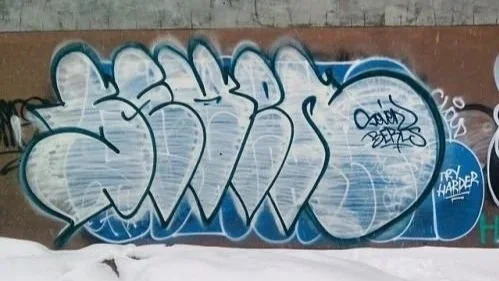
On the other side of the debate, many writers advocate for finding one throw-up style you love and sticking with it. This approach is all about consistency, brand recognition, and mastery. In graffiti, having an instantly recognizable throw-up is gold. When you paint the same design everywhere, you create a visual trademark. Someone taking a train through the city should be able to spot your throwie on a wall and know, “Yep, that’s that writer’s work,” without even needing to read it clearly. Repetition builds fame in the graffiti world, the more spots people see your throw-up, the bigger your reputation. And if it’s always the same style, the recognition multiplies.
There’s also a practical advantage: when you have one refined throwie committed to muscle memory, you can execute it super fast and clean. Think of your throw-up like a logo or a signature. The more you do it, the more flawless and efficient it becomes. Many of the all-time great bombers stuck to one or two solid throw-up designs and just owned them. They could paint them in under 30 seconds, perfectly, every time. That kind of mastery only comes from doing the same letters thousands of times.
Sticking with one style doesn’t necessarily mean your throwie never changes at all over the years – often it evolves in subtle ways as you refine it. But the core look remains. The case for a signature throwie is also about identity. In a subculture where everyone is trying to get noticed, having a unique but consistent style sets you apart. It’s like a calling card. Other writers might change up their look with the seasons, but if you have your thing and it’s dope, you’ll stand out. Additionally, a well-honed throwie that you’ve been rocking for years often has a certain flavor or confident flow that new experiments might lack. There’s something to be said for quality through repetition, each time you paint that throwie, you’re fine-tuning the lines, the proportions, the speed. Over time it becomes super clean and second nature. And if it ain’t broke, why fix it?
Grab a digital copy here: Ultimate Graffiti Guide Book Part 1: Fundamentals