

The Start of Graffiti Bombing (Taki 183 History)
The history of graffiti in New York City owes a huge debt to one of its earliest, famous and most iconic taggers: Taki 183. In the late 1960s and early 1970s, the simple scrawl of “Taki 183” became synonymous with the origin of tagging culture and turned a humble Washington Heights teenager into a graffiti legend. Taki 183 is widely regarded as a graffiti art pioneer, a foundational figure among early graffiti writers whose fame helped launch NYC graffiti into the public consciousness. This blog post dives into Taki 183’s real identity, the origin of his tag, how his ubiquitous tagging gained notoriety (culminating in a 1971 New York Times profile), his influence on the graffiti community, and how he eventually retreated from the scene. We’ll also explore the contrast between those early taggers and the later mural-based graffiti movement, and reflect on how Taki is viewed now in NYC graffiti history.
Who Is Taki 183? Real Identity and the Origin of His Tag

Taki 183’s real name is Demetrius, a Greek-American kid from 183rd Street in the Washington Heights neighborhood of Manhattan. In fact, “Taki” comes from “Demetraki,” a common Greek nickname for Demetrius. The number “183” simply refers to 183rd Street, the block where he lived. In the summer of 1969, Demetrius was a bored 16-year-old hanging around his predominantly Greek neighborhood when a friend told him about another local teen making a name for himself: Julio 204, a kid from nearby who wrote his name Julio followed by his street number 204 on walls around the neighborhood. Taki found this idea fascinating, “they can be known, I want to be known also,” he thought. Inspired by Julio 204’s example, Demetrius and his buddies started writing their own names wherever they could. Demetrius adopted his tag name “Taki” and tacked on “183” for his street number, giving birth to the tag Taki 183.
What began as a local copycat act quickly grew into an obsession. “I liked the feeling of getting my name up, and I liked the idea of getting away with it. Once I started, I couldn’t stop,” Taki later admitted. At first, he and his friends tagged around their neighborhood in northern Manhattan. But Taki 183 was destined for bigger things than just one borough.
Going “All City”: How Taki 183’s Tag Spread Across New York
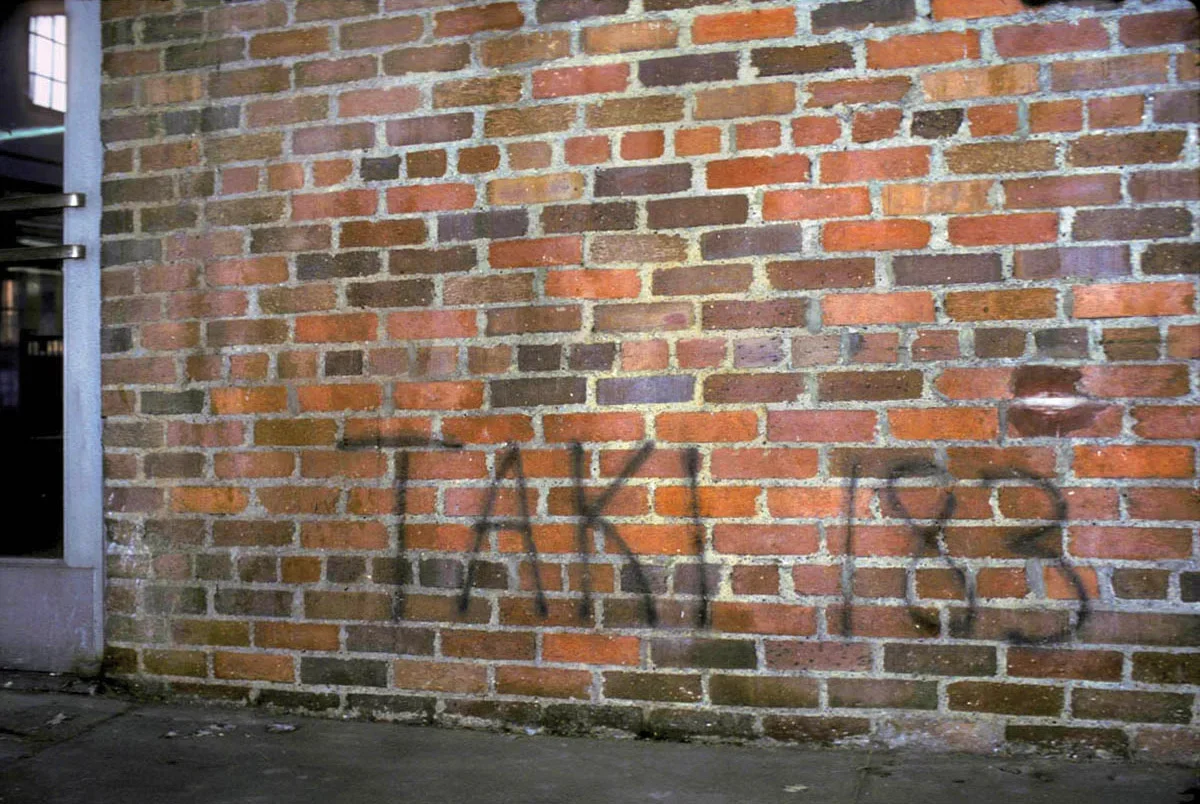
By late 1969, 1970, the name Taki 183 had become legendary around New York City, appearing in places far beyond Taki’s home turf. While most early graffiti writers of the era stuck to tagging in their own neighborhoods, Taki had a different approach. He went “all city,” meaning he wrote his tag all over NYC, uptown, downtown, and even outside the city. Taki carried a marker (and sometimes a can of spray paint) with him everywhere, marking any surface he could. Subway stations, building walls, phone booths, buses, if there was a blank spot, Taki 183 would hit it. He later recalled that “any flat surface was good… If there was a blank space, I hit it.”
Several factors helped Taki go “all city.” For one, in fall 1970 he started attending high school in Midtown Manhattan, which meant daily train rides from Washington Heights into the heart of the city. Each commute was another opportunity to tag station walls and street signs along Broadway and beyond. He even drew inspiration from the ubiquitous political campaign stickers and posters plastered around the city during the 1968 and 1970 elections, if politicians could saturate the city with their names, why not him? Taki mimicked their strategy, aiming to get his graffiti tag seen by as many people as possible.
Another key factor was Taki’s job at the time. He worked as a foot messenger in Manhattan, delivering packages of high-end cosmetics to offices and boutiques around town. Ever resourceful, Taki used his work to his advantage: he would carry his marking pen and hold a delivery box up to hide his hand as he tagged lamp posts and walls in upscale areas like the Upper East Side. This tactic allowed him to put “Taki 183” in neighborhoods where graffiti was virtually unheard of, sparking curiosity among city dwellers who saw this mysterious name popping up everywhere.
By 1971, TAKI 183’s graffiti tag was spotted not only all over the five boroughs of New York, but even in places outside the city, from New Jersey to Connecticut, and as far as Kennedy Airport. Taki had truly achieved an “all-city” presence, reaching areas no single tagger had before. His omnipresent signature had New Yorkers scratching their heads: Who is this Taki 183 who seems to be everywhere?
“Taki 183 Spawns Pen Pals” – The 1971 New York Times Article that Put Graffiti on the Map

On July 21, 1971, Taki 183 went from an underground mystery to a name known nationwide. The New York Times published a feature article titled “Taki 183 Spawns Pen Pals,” bringing the secretive world of graffiti tagging to the mainstream. In that piece, the Times reporter recounted how Taki, a 17-year-old Manhattan teenager (Demetrius, last name withheld) “writes his name and street number everywhere he goes,” from subway stations to train cars and even in other states. The catchy headline implied that Taki had started a fad, spawning countless “pen pals” emulating his example.
The New York Times article was a watershed moment in NYC graffiti history. It marked the first time a graffiti writer became the subject of widespread media attention, effectively making Taki 183 the first graffiti celebrity in NYC. Taki himself was astonished that a prestigious newspaper would profile him. “I didn’t understand why they would waste their time on some kid who was tagging… Aren’t there more important things going on in the world?” he later said of his reaction. But whether he found it silly or not, the impact was undeniable.
Suddenly, everyone knew the name Taki 183, and the broader public learned about this new phenomenon of tagging. If “Taki 183” was in the Times, it had to be a big deal. As Taki quipped, “After all, if The New York Times says so, it must be true!” The media frenzy was on, newspapers, TV and magazines grew interested not only in Taki’s exploits (his “greatest hits,” as he joked), but in the entire culture of graffiti tagging that was emerging. Ironically, the publicity that was meant to shed light on this incognito vandal ended up inspiring a whole new generation of graffiti writers. The Times article even listed some of the new tags appearing around the city, such as Joe 136, Barbara 62, Eel 159, Yank 135, and Leo 136, noting that Taki 183 had “spurred hundreds of imitators.” The piece essentially broadcast a challenge to every ambitious city kid: if Taki can become famous by writing his name, maybe you can too. According to later historical accounts, that single article “opened the floodgates” for graffiti – it’s often deemed the catalyst that encouraged thousands of youths in the early ’70s to start tagging their own names all over New York.
Taki’s response to his newfound fame was a mix of pride and bemusement. On one hand, he “felt like a celebrity” and recognized that the Times story gave him instant legendary status. On the other hand, being in the spotlight also meant unwanted attention – he preferred to keep a low profile, even asking the reporter not to print his full last name for privacy. In the article, Taki defended his tagging hobby, saying, “I work, I pay taxes, and it doesn’t harm anybody,” and even cheekily questioned why authorities were more upset about graffiti than the political campaign stickers that littered the subways each election season. But regardless of any controversy, the genie was out of the bottle: Taki 183 had become the face of a budding graffiti movement, and media coverage ensured that graffiti in New York was now part of the public conversation.
Sparking a Movement: Taki 183’s Influence on Early Graffiti Writers
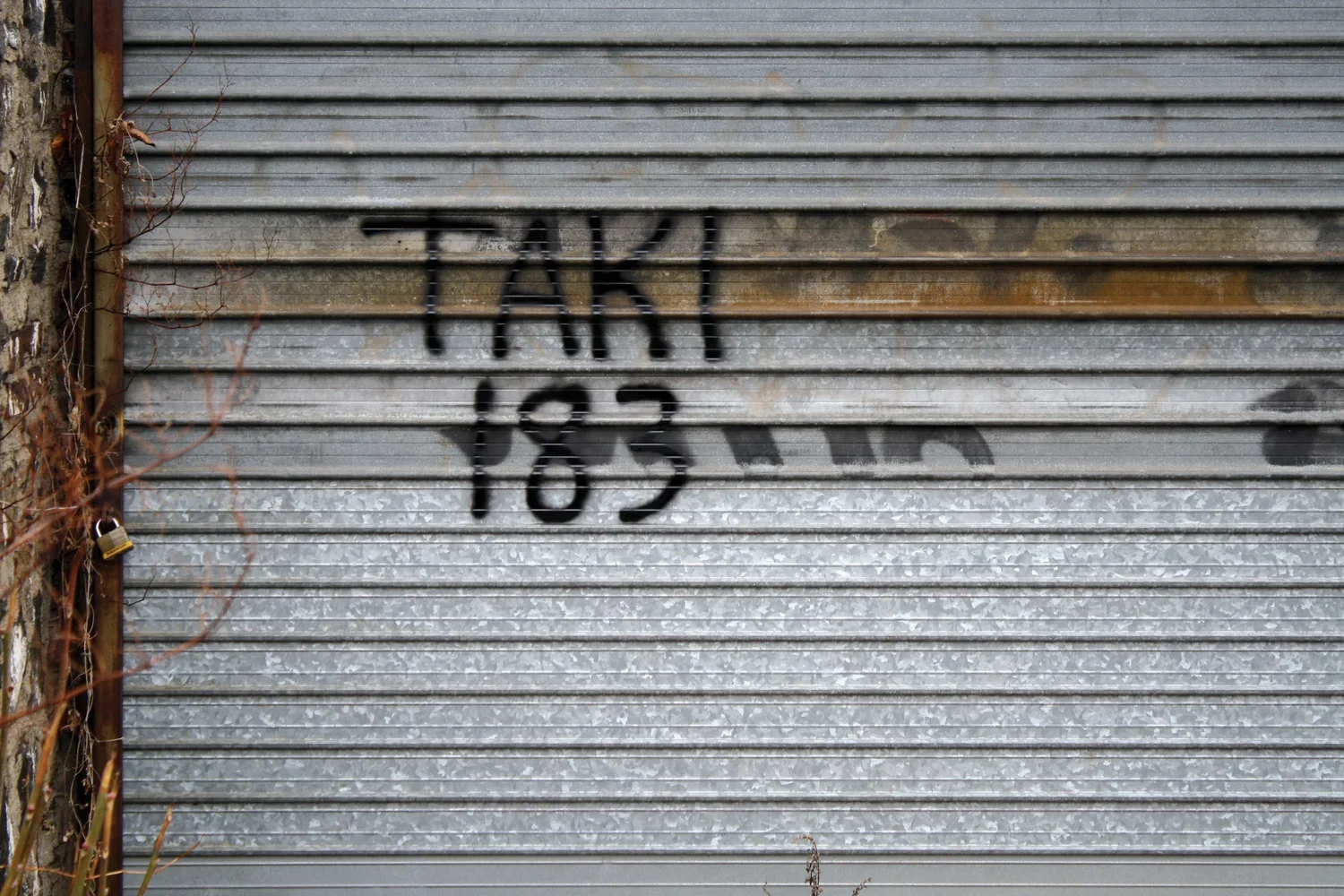
That New York Times article and Taki 183’s citywide tagging spree didn’t just make him famous; they helped ignite an entire subculture. In the wake of Taki’s notoriety, the streets and subways of NYC were flooded with new tags. As one observer noted, “Maybe not the first, but without a doubt the guy responsible for the graffiti explosion.” Young people all over the five boroughs, from the Bronx to Brooklyn, picked up markers and spray cans, eager to “get their name up” like their new hero Taki. “The floodgates opened,” and suddenly walls were covered with tags bearing the now-familiar name-and-number style that Taki had use, and many imitators of Taki would go on to also use. I want to stress, Taki did not start this trend, it had existed long before, but due to Taki’s popularity, the graffiti writers he’d inspire to begin doing graffiti would often copy this naming convention.
Taki 183’s influence went beyond just a format; he demonstrated the power of mobility and audacity in graffiti. He showed that a kid with a marker could make himself famous without any permission or platform, just by relentlessly inscribing his name on the city’s infrastructure. Graffiti became, for many, a form of urban fame-seeking and expression of identity. “Graffiti became a way for many young people to try to get attention, and the attention Taki 183 received spurred this on,” notes one historical account of the era. In other words, Taki’s example turned tagging into a citywide craze and a precursor to what would evolve into the modern graffiti and street art movement.
It’s worth noting that Taki himself never claimed to be the first graffiti writer, in interviews, he humbly points out that others like Julio 204 were writing before him. But Taki 183 undeniably became the most famous name of graffiti’s early years, and for that, the community reveres him. He is frequently called the “father of modern graffiti” or the original “king” of tagging. NYC graffiti history books, documentaries, and exhibits invariably mention Taki 183 as the pivotal figure who set the stage for what was to come. Without Taki, graffiti might have remained a local fad; with Taki (and the media megaphone that followed him), it became a bona fide cultural phenomenon.
Grab a digital copy here: Ultimate Graffiti Guide Book Part 1: Fundamentals